Addiction
SUD in adolescents
The nature of adolescence
Adolescence is an important developmental period during which the transition from childhood to adulthood occurs. Adolescent development is more than the physical phenomenon of puberty. Cognitive maturation and psychosocial development are also important aspects of adolescence.
Physical development
Commences with the onset of puberty, and is characterized by physical growth and the development of secondary sexual characteristics and reproductive capability.
Cognitive development
Progresses until the young adult years (around 20 years of age). During this time cognitive capabilities move from concrete thinking in early adolescence to abstract thinking by late adolescence. For instance, talking about the long-term effects of alcohol, such as liver disease rarely has impact on the early adolescent. It is better to talk with the young adolescent about how heavy drinking contributes to difficulties in their relationships with peers or family, or difficulties performing at school.
Psychosocial development
Includes the development of a stable and independent identity, relationships beyond family to peers, a moral and value system, an understanding of sexuality and acquisition of skills for a future vocation.
Early adolescence (approximately 11–13 years)
Early adolescence is characterized by the physical and physiological changes of puberty. Adolescents are frequently concerned at this time about whether their development is ‘normal’ and in keeping with their peers. In early adolescence, teenagers are usually still dependent on family, but peers (usually of the same sex) become increasingly important. Early adolescence is characterized by concrete thinking.
Middle adolescence (approximately 14–16 years)
Middle adolescence is characterized by the increasing development of autonomy. At this time, identity becomes very important to the young person. Attachment to peer groups takes place and being attractive, accepted and popular are often a focus of this stage of development. Experimentation and risk taking are very common. This may include experimentation with alcohol and other substance.
Late adolescence (approximately 17–20 years)
In late adolescence more mature intellectual abilities have developed. Independence and a sense of identity and self-worth are usually evident, and plans and aspirations for the future, including employment and relationships are characteristic.
Substance use and adolescent development
Regular or heavy substance use frequently inhibits adolescent development by delaying the time that psychosocial milestones are reached, impairing cognitive maturation, reducing educational achievements, impairing the development of healthy relationships and increasing the likelihood of mental health problems in adolescence and adulthood. Differentiating significant problems from experimental or occasional use. Adolescent substance use fits a spectrum
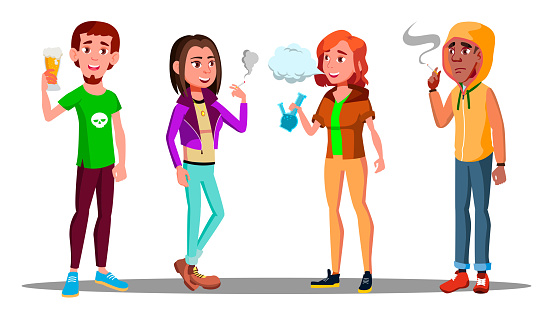
‘Experimentation’ with substances by young people is much more common than progression to regular use. Sometimes adolescents use drugs only in specific situations, for instance, only when attending parties or when socializing with certain peers. This is sometimes referred to as ‘situational’ or ‘recreational’ use. Other adolescents use drugs to self-medicate difficulties with sleep or emotional difficulties (this may sometimes be referred to as ‘habitual use’).
‘Abuse’ of alcohol or a drug usually refers to situations when it is resulting in recurrent problems. Examples of problems include difficulties with family or friends, failure to fulfill study requirements, or even attend school because of substance use.
Patterns of substance use that influence progression to problems include: - Onset of alcohol or other drug use in early adolescence - Heavy use (both in terms of dose and frequency).
Specific details in the substance use history
Polysubstance use.
In contrast to many adults, polysubstance use is common among adolescents. Therefore, when obtaining a drug use history from young people, it is important to specifically ask about each substance. Most young people often don’t consider alcohol and tobacco to be drugs, and so these need to be specifically asked about. For any given substance, gather information on: - How often they take that substance - The dose used (i.e., how many drinks on a given occasion, how many cigarettes a day, how many times they use marijuana in a given week or on a given day) Whether episodic binge use occurs and if so, how often
Approaches to managing adolescent substance use aim to reduce risk factors and strengthen protective factors where possible
Some risk and protective factors for substance use in adolescents
| Biological factors | Genetic, physiological factors |
| Temperament and personality traits | antisocial personality disorder, sensation seeking trait |
| Familial factors | Familial attitudes that are favorable to substance use, parental modeling of substance use, poor or inconsistent parenting practices |
| Early onset of substance uses | Alcohol or drug use before age 15 years |
| Emotional and behavioral problems | Conduct disorder, depression, Attention deficit/hyperactivity disorder, anxiety |
| Poor social connections | to school and community groups |
| Peer use of substances | Attitudes and behavior favorable to Substance use. |
- 1-Confidentiality
Confidentiality is extremely important in the relationship between a young person and a health professional. Adolescents frequently will not disclose the details of their substance use if they are concerned that confidentiality will not be maintained by the health professional.
- Take a broad psychosocial history
- Adolescents respond well to a holistic approach, rather than a focus on their substance use
- 2-Screen for mental health problems
Mental health problems often emerge in adolescence and should be screened for regularly.
- 3-Avoid judgment
Any perception of judgment about the adolescent’s substance use on the part of the health professional impedes engagement with the young person.
- 4-Differentiating problematic from experimental use
In addition to the extent of use, it is helpful to find out whether the young person has experienced problems (physical, emotional, social, or legal) with their substance use, e.g. Do things happen when you use drugs/drink heavily that you later regret/wish didn’t happen?
Where there is a history of heavy substance use obtained, ask the young person whether they experience:
- Difficulty controlling use of the substance
- Withdrawal symptoms when they do not use a substance (e.g., ‘if you don’t’ use marijuana, how do you feel?’).There is increasing evidence to suggest that these features of physical drug dependence may commence in adolescence, rather than later in adulthood.
- Drop in school grades
- Behavioral changes—change of friends, lack of interaction with family
- Changes in appearance—red eyes (cannabis), thin (amphetamines)
- Loss of interest in hobbies, sport, activities
- Changes in eating pattern (cannabis increased, amphetamines reduced)
- Changes in sleeping pattern - Lethargy, loss of motivation
- Mood swings (‘uppers and downers’)
- Problems with the law (drink driving, assault, break enter and steal, criminal activity).
Management of substance use disorders in adolescents:
The Young Person
Management of substance use disorders in adolescents requires a multi-prong approach, which takes into account the adolescent’s stage of development and includes behavioral strategies, intervention for mental health and well-being and in some cases medication.
Cannabis use is particularly common among adolescents and young people. Adolescents should be advised that:
There is now sufficient evidence that in certain vulnerable individuals with a genetic predisposition, cannabis could increase their risk of developing a psychotic illness later in life.
Because there is a great deal of variability in the potency of cannabis, previous exposure to cannabis without apparent ill effect does not mean that subsequent exposure will be equally harmless.
With regard to opioid use, pharmacological management (naltrexone, methadone, buprenorphine) of the drug-dependent adolescent is increasingly undergoing evaluation to clarify when adolescents benefit from pharmacotherapy
The Family
Depression and anxiety often occur in parents of substance abusing adolescents, sometimes reaching clinical levels of severity. Parents frequently describe feelings of helplessness and a lack of confidence about having the appropriate parenting skills to deal with their teenager’s drug use. The health professional can help empower parents through:
- Education about substance use
- Advice and/or referral for assistance with parenting strategies
- Management of depression of anxiety.
Families are an integral part of the adolescent’s world and it is therefore important to try to assist the young person to rebuild connection. Depending on the individual circumstance this connection may be achieved through mediation by the health professional or more formally with family counselors.
Increasing access to treatment:
Outreach
They sometimes need specific outreaching and proactive services that cater appropriately for their developmental stage and incorporate a consideration of their cultural background, lifestyle, and in many cases their family
Prevention of substance use disorders in adolescence
Resilience in adolescence can help protect against substance use. There is evidence that resilience can be promoted by increasing a sense of connectedness of the adolescent, e.g., to family, school, or to sporting, religious or cultural groups.
Harm reduction in the adolescent context
Advice on the less harmful methods of using drugs may be appropriate in adolescents whose substance abuse is unlikely to cease for some time. As for adults, principles of harm reduction apply to the adolescents, although they need to be appropriately modified for young people of differing developmental stages.
Opportunistic health care
Is very important in young people, particularly the homeless, as they tend not to engage with primary care services.
This includes attending to screening and management of blood-borne viruses and sexually transmitted infections, addressing intercurrent health problems (chest infections, skin rashes).
Mental health problems should always be monitored in young people. Substance use may complicate depression and anxiety that is common in adolescence, Psychosis can also occur with heavy substance use.
Transition from adolescent to adult drug treatment services
The ultimate aim is to promote the young person’s capacity for self-management and to improve their life chances, the aims of successful transition of young people to adult-orientated health services are to optimize both their health and their ability to adapt to adult roles.
Confidentiality and informed consent must be maintained for the adolescent or young person as they traverse systems and engage with different health professionals.
-Spend time with young people, communicate with them, and be involved in their lives
-Get to know their friends, and their friend’s parents
-Set a good example—good role modeling is important
-Be alert to early warning signs of drug use
-Do not over react, be calm, and avoid conflict
-Do not nag or lecture—reason honestly with them
-Set sensible ground rules and boundaries
-Ensure adult supervision at parties; plan how they and their friends get home
-Seek professional help—from GPs, psychologists, addiction specialists, psychiatrists—if problems arise.